Supervised Learning Algorithms: A Comprehensive Guide
Supervised learning involves training a model using labeled data, where both the input and output variables are known. The model learns the patterns from the data and applies this knowledge to predict outcomes for new, unseen data.
Introduction
Supervised learning is a fundamental concept in machine learning, widely used across industries such as healthcare, finance, and retail. It involves training a model using labeled data, where both the input and output variables are known. The model learns the patterns from the data and applies this knowledge to predict outcomes for new, unseen data. In this blog, we’ll focus on the different supervised learning algorithms, explain how they work, and discuss their real-world applications.
What Are Supervised Learning Algorithms?
Supervised learning algorithms rely on datasets where the input-output mapping is predefined. The algorithm trains on this labeled data, learning the relationship between inputs (features) and outputs (target variables). Supervised learning tasks can be split into two main categories: classification and regression.
In classification, the outputs are discrete labels, like "spam" or "not spam." In regression, the output is continuous, such as predicting a price or temperature. Now, let’s take a closer look at the most popular algorithms used in supervised learning.
Regression Algorithms in Supervised Learning
Linear Regression
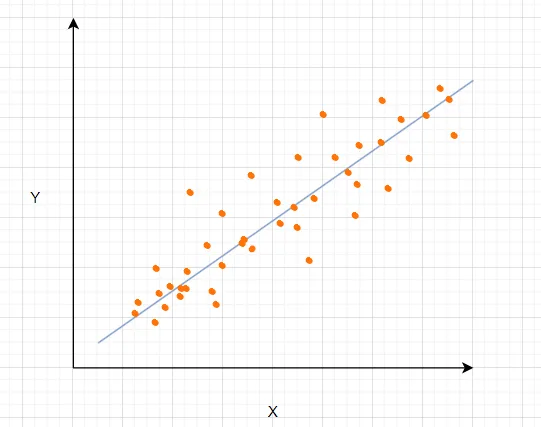
Linear regression is one of the simplest algorithms in supervised learning. It models the relationship between a dependent variable and one or more independent variables, assuming the relationship is linear.
- How it Works: The algorithm fits a line to the data points that best represents the relationship between the input and output variables. The objective is to minimize the difference between the predicted and actual values (errors).
- Use Cases: Linear regression is used in predicting house prices, stock market trends, and sales forecasts.
Polynomial Regression
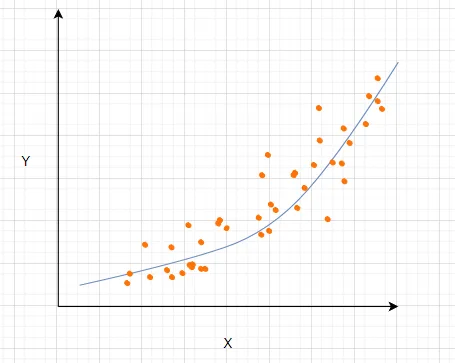
Polynomial regression extends linear regression by fitting a non-linear equation to the data. This is especially useful when the data points do not follow a straight line.
- How it Works: Polynomial terms (like x², x³) are added to the linear equation, allowing the model to capture more complex relationships between variables.
- Use Cases: Polynomial regression is commonly used in growth predictions, product demand forecasting, and curvilinear data modeling.
Ridge Regression (L2 Regularization)
Ridge regression is a variation of linear regression that addresses overfitting. Overfitting occurs when the model becomes too complex and fits the noise in the training data instead of the underlying pattern.
- How it Works: Ridge regression adds a penalty to the magnitude of the coefficients in the model. This regularization prevents the coefficients from growing too large, which can lead to overfitting.
- Use Cases: Ridge regression is effective in situations where there are many highly correlated independent variables, such as in economic modeling and healthcare cost predictions.
Classification Algorithms in Supervised Learning
Decision Trees
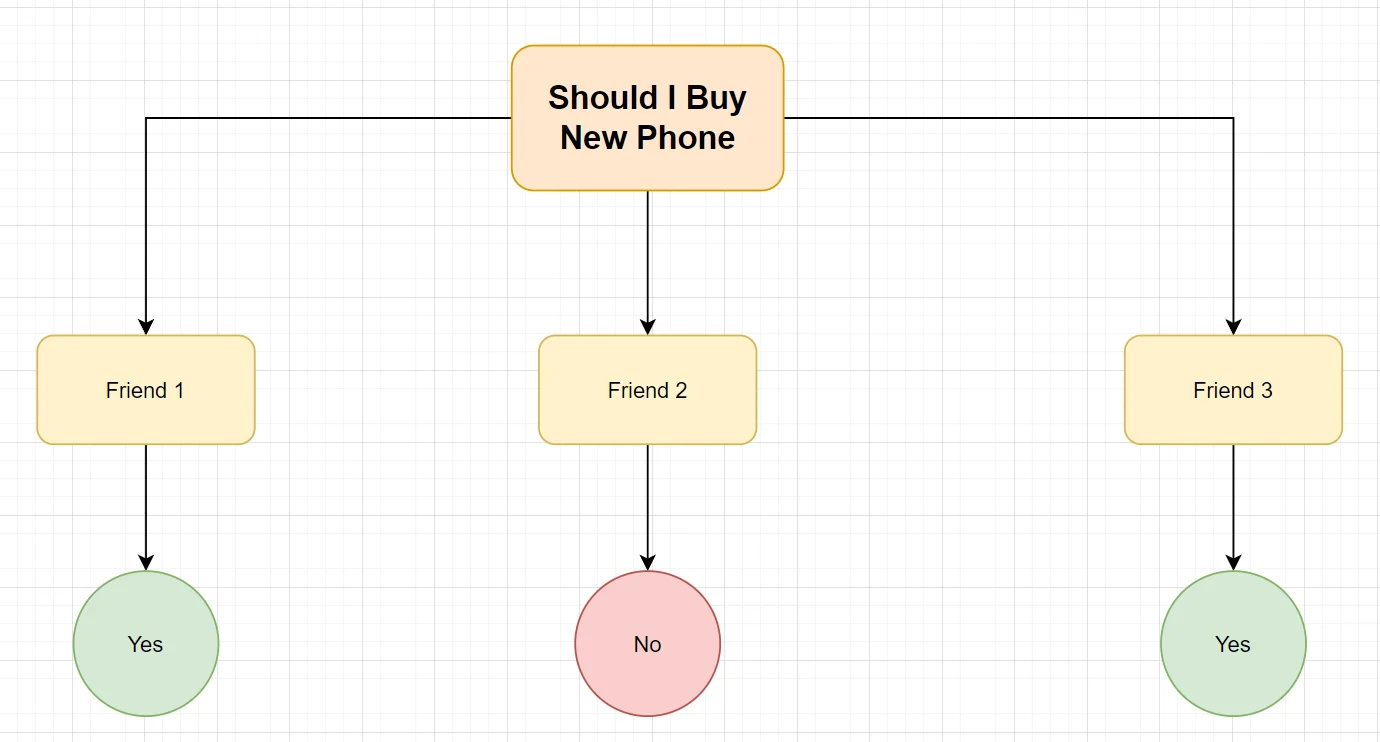
Decision trees are intuitive algorithms that classify data by breaking it down into smaller subsets. Each internal node of the tree represents a decision based on a feature, and each branch represents an outcome of the decision.
- How it Works: The algorithm builds a tree where each decision node represents a test on an attribute. The branches represent the possible outcomes, and leaf nodes represent the final class label.
- Use Cases: Decision trees are used in areas like medical diagnosis, fraud detection, and credit risk assessment.
Random Forest
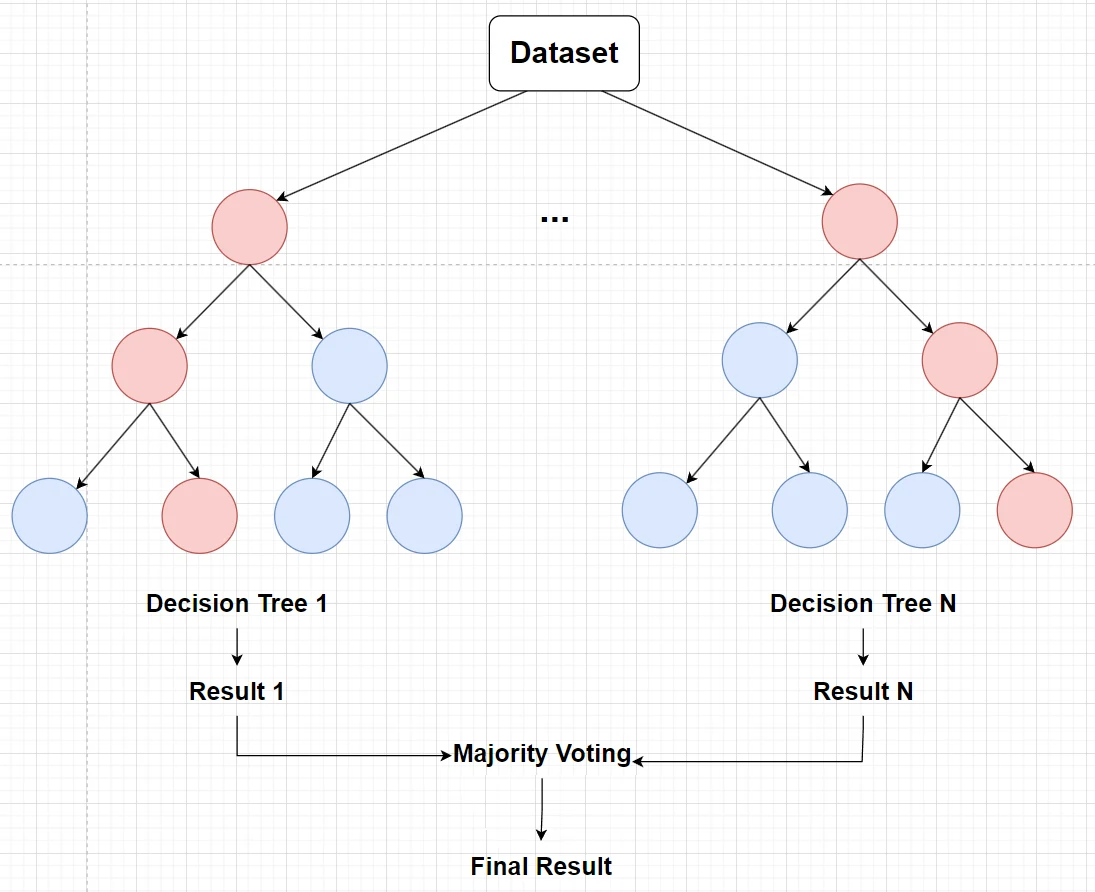
Random forest is an ensemble learning technique that builds multiple decision trees and combines their results to improve performance. It’s a powerful algorithm that reduces the risk of overfitting present in a single decision tree.
- How it Works: The algorithm creates multiple decision trees from randomly selected subsets of data and features. The final prediction is determined by aggregating the results (voting for classification, averaging for regression).
- Use Cases: Random forest is widely used in image classification, text analysis, and recommendation systems.
Support Vector Machines (SVM)
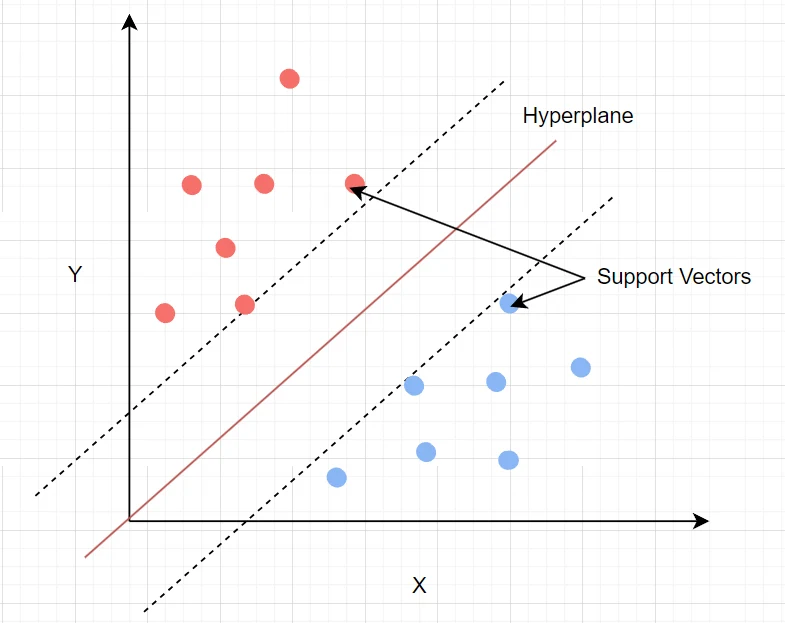
Support vector machines are robust classification algorithms that aim to find the optimal boundary (hyperplane) that separates different classes. It works well for both linear and non-linear classification problems.
- How it Works: SVM works by finding a hyperplane that maximizes the margin between the closest points of different classes. For non-linear data, SVM uses kernel functions to map the data into a higher-dimensional space, making it easier to classify.
- Use Cases: SVM is used in applications like face recognition, handwriting analysis, and bioinformatics.
K-Nearest Neighbors (KNN)
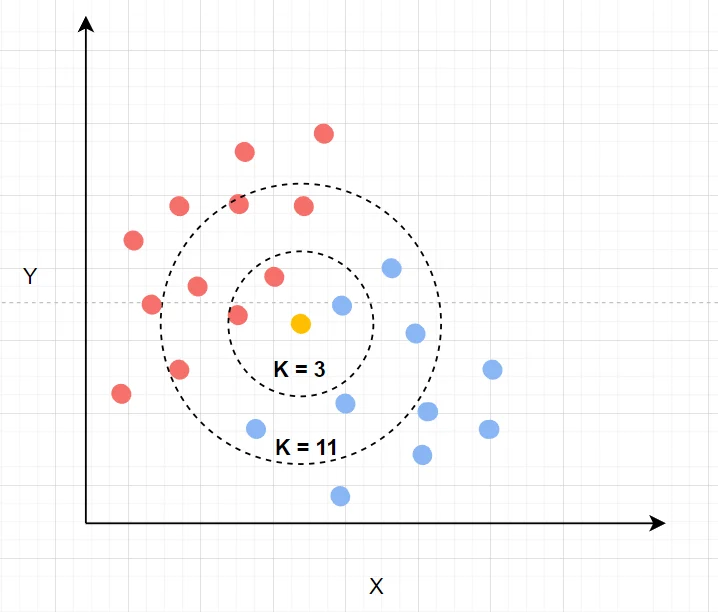
KNN is a simple and intuitive classification algorithm that assigns a data point to the class most common among its nearest neighbors. It is a non-parametric method, meaning it makes no assumptions about the underlying data distribution.
- How it Works: The algorithm calculates the distance between a data point and its 'k' nearest neighbors, and the class with the majority votes determines the final classification.
- Use Cases: KNN is often used in recommendation systems, customer segmentation, and pattern recognition.
Naive Bayes
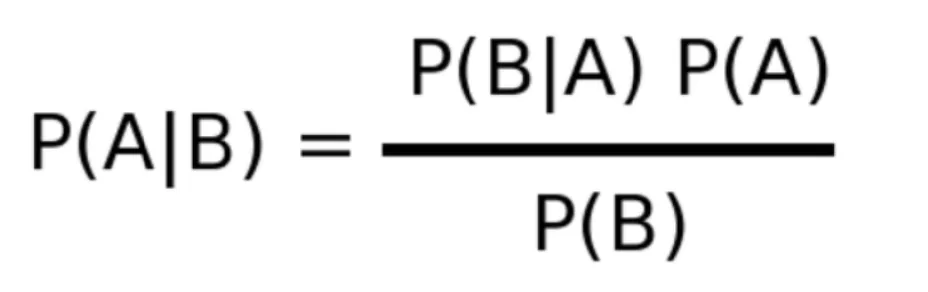
Naive Bayes is a probabilistic classification algorithm based on Bayes’ theorem. It assumes that features are independent, which is a "naive" assumption but often works well in practice.
- How it Works: The algorithm calculates the probability of each class given the input features and selects the class with the highest probability.
- Use Cases: Naive Bayes is popular in spam filtering, sentiment analysis, and document classification.
Comparing Supervised Learning Algorithms: Strengths and Weaknesses
Different supervised learning algorithms have varying strengths and weaknesses. Factors like accuracy, speed, interpretability, and scalability play a key role in selecting the appropriate algorithm for a given problem.
| Algorithm | Strengths | Weaknesses |
|---|---|---|
| Linear Regression | Simple, easy to interpret | Assumes a linear relationship |
| Decision Trees | Easy to understand, works for non-linear data | Prone to overfitting without pruning |
| Random Forest | Reduces overfitting, works well with large datasets | Less interpretable than a single tree |
| SVM | Effective for high-dimensional spaces | Computationally expensive for large datasets |
| KNN | Simple, no training phase | Slow for large datasets |
| Naive Bayes | Fast, works well with large feature sets | Assumes feature independence |
Challenges in Implementing Supervised Learning Algorithms
Overfitting and Underfitting
Overfitting happens when a model learns the noise in the training data rather than the true patterns, leading to poor performance on new data. Techniques like pruning for decision trees and regularization for regression models help mitigate overfitting. On the other hand, underfitting occurs when a model is too simple to capture the patterns in the data. Increasing model complexity or using more powerful algorithms can help prevent underfitting.
Scalability with Large Datasets
Some algorithms, like KNN, can struggle with large datasets because they need to compute distances between all points during classification. In such cases, dimensionality reduction techniques like PCA (Principal Component Analysis) or using more scalable algorithms like random forests may be better suited.
Data Preprocessing
Supervised learning algorithms perform best with well-preprocessed data. This involves handling missing values, scaling features (especially for algorithms like SVM and KNN), and ensuring that the data is free from noise. Proper data preprocessing is key to improving the performance and accuracy of supervised learning models.
Conclusion
Supervised learning algorithms are powerful tools that can be applied to a wide range of problems, from predicting continuous values using regression to classifying data into discrete categories. The choice of algorithm depends on the nature of the problem, the size of the dataset, and the need for accuracy or interpretability. Understanding the strengths and limitations of each algorithm will help you choose the right one for your task.
FAQ Section
1. What is the difference between supervised and unsupervised learning?
Supervised learning requires labeled data, where the input-output relationships are known, while unsupervised learning works with unlabeled data and seeks to discover hidden patterns or structures.
2. When should I use classification over regression algorithms?
Classification algorithms are used when the output is a categorical label (e.g., spam or not spam), while regression algorithms are used when the output is a continuous value (e.g., predicting house prices).
3. What is the importance of labeled data in supervised learning?
Labeled data allows the algorithm to learn from past examples and make accurate predictions on new data. Without labeled data, the model wouldn't know how to map inputs to outputs.
4. How can I prevent overfitting in my model?
Overfitting can be reduced by using techniques such as cross-validation, regularization (for regression), and pruning (for decision trees). Additionally, using simpler models or more data can help prevent overfitting.
5. Which algorithm is best for a beginner to start with?
Linear regression and decision trees are good starting points for beginners due to their simplicity, ease of implementation, and interpretability.